U.S. homelessness dropped last year : NPR
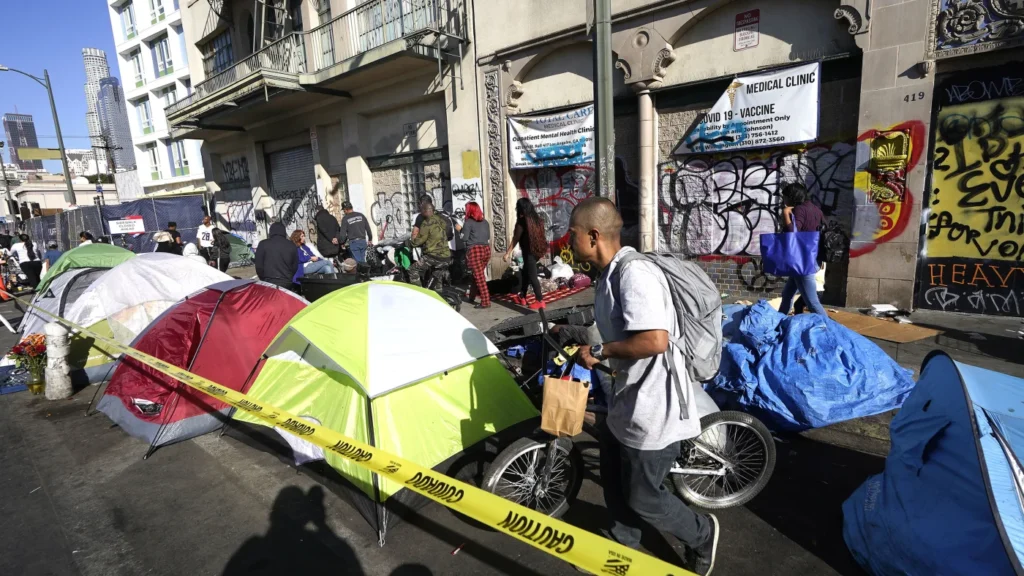
People line up along temporary tents to partake in a free Thanksgiving meal provided by the Union Rescue Mission as the Los Angeles Skid Row district annual feast hosts thousands of homeless and others in need, in downtown Los Angeles on Nov. 24, 2022.
Damian Dovarganes/AP
hide caption
Damian Dovarganes/AP
After years of increasing to record-high levels, the homeless population in the U.S. dropped more than 6% in 2025. That amounts to roughly 49,000 fewer people without housing. It’s the second year in a row that homelessness has declined, with a smaller drop in 2024.
“President Trump’s actions to secure the border, get criminal illegals off our streets, and restore safety to our communities drove a historic decrease in homelessness,” Housing and Urban Development Secretary Scott Turner said in a press release announcing the results of an annual count in communities around the country. The agency had not yet posted a detailed report.
A second independent analysis based on the same count, but commissioned by the advocacy group National Alliance to End Homelessness, found a similar decline but credited different reasons for it.
“It’s good news that more people are getting housed, and that the programs that are funded by Congress are working,” said CEO Ann Oliva.
Both analyses find there’s still nearly 700,000 people in the U.S. living in shelters or on the streets, significantly more than before the COVID-19 pandemic.

The Trump administration cited its changes in immigration policy as a key factor in the decline. During the Biden administration, New York, Chicago, Boston and Denver all saw a surge in asylum seekers who turned up at homeless shelters. “That’s also the four cities that have driven half of the drop most recently,” said Devon Kurtz, Public Safety Policy Director at the Cicero Institute, an administration ally on homelessness policy.
Kurtz also pointed to declines in cities like San Francisco, which is moving to support more sober-living options, housing that bans drugs and alcohol. But critics say that can send more people back to the street if they relapse, which is common.
The Trump administration argues that the requirement to be drug-free would help more people achieve recovery, and wants to expand such programs. In fact, the administration wants to overhaul several billion dollars in homelessness spending and shift it toward short-term housing with mandated addiction and mental health treatment. So far that’s been blocked by courts.
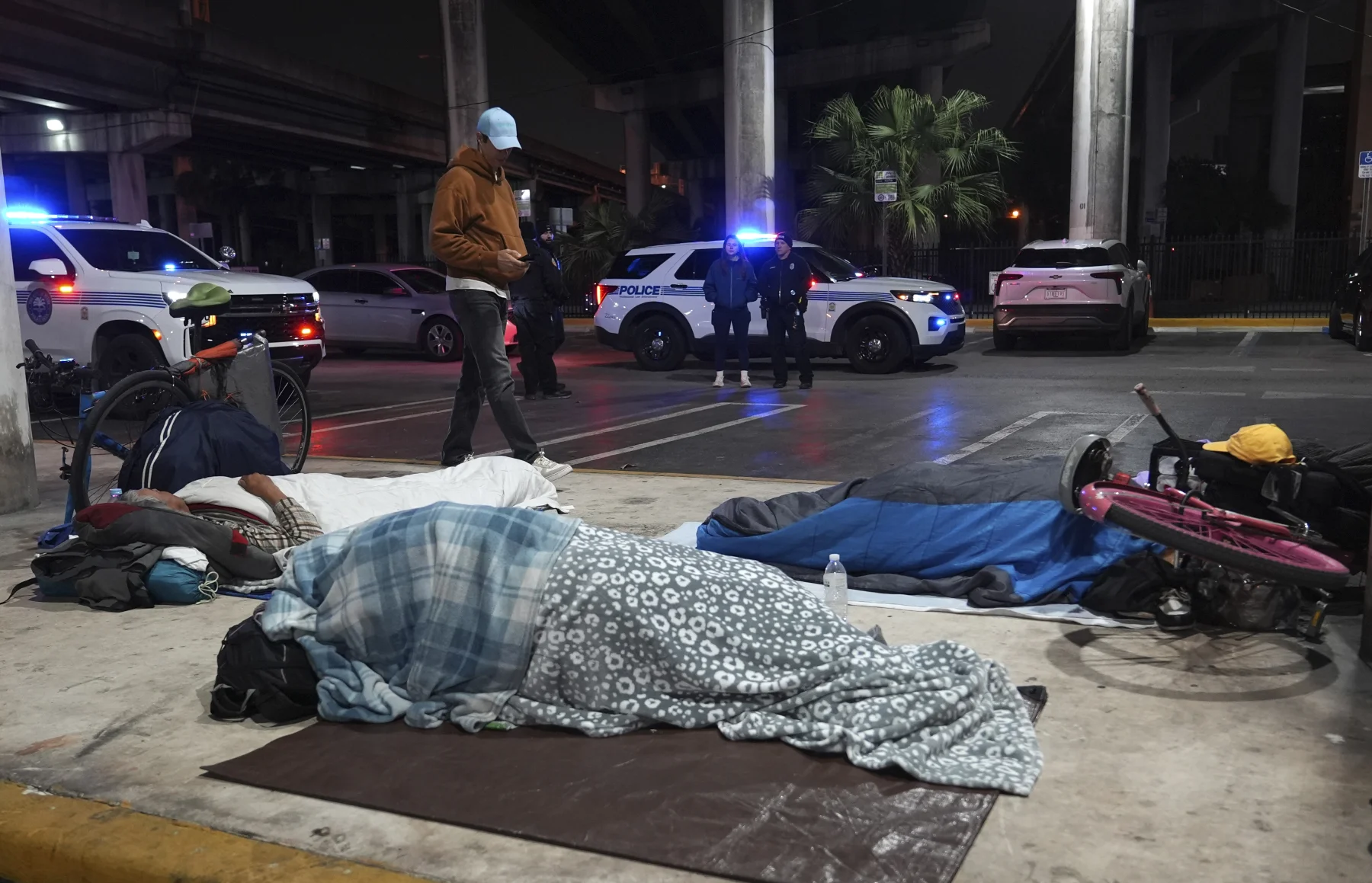
Manny Sarria, of the Miami-Dade County Homeless Trust, left, walks past people sleeping on the street during the annual Point-in-Time count of people experiencing homelessness Friday, Jan. 24, 2025, in Miami.
Lynne Sladky/AP
hide caption
Lynne Sladky/AP
The administration says longstanding federal policy of getting people into permanent housing first, then offering voluntary treatment, has failed, and is to blame for the pandemic spike in homelessness. But Oliva, with the homelessness alliance, said programs that get people off the street without preconditions were a big part of the latest declines, especially among veterans.
“Investments in programs like that are much closer to the scale of need for veterans than for any other population experiencing homelessness,” she said. Homelessness among U.S. veterans was down more than 7% last year, and has declined nearly 60% since 2010.
By contrast, Oliva said more permanent housing is needed for people who are chronically homeless, and more likely to suffer from mental health problems and addiction. Unlike other groups that saw a decline last year, there was a small uptick in people who’ve been homeless for a long time.

HUD also credited a crackdown on homeless encampments after the Supreme Court in 2024 said cities can ban people from sleeping and camping in public places. Oliva said the analysis her group commissioned showed that cities with such bans “actually did worse than the national average.”
Oliva noted last year’s decline in homelessness was broad and likely due to a number of factors, including softening rental markets in some places. Even though rents are still high they’re down from record peaks during the pandemic, and that could stem the flow of newly unhoused people.
There were also declines in places that saw major weather disasters, like western North Carolina and Hawaii. When HUD and other groups move in to help those displaced, unhoused people also get assistance they did not have before.
About The Author