What to stock in your medicine cabinet for cold and flu season : NPR

Never miss a story or episode from Life Kit. Sign up for our weekly newsletter to get our journalism delivered directly to your inbox.
Is your household ready if you get hit with a stomach bug tomorrow? Sniffles on Saturday? The flu in a month or two?
In the United States, cold and flu season occurs in the fall and winter, starting in October and stretching all the way through May, according to the Centers for Disease Control and Prevention.
The combination of dropping temperatures and drier climates makes us more susceptible to common respiratory viruses like the common cold, the flu, RSV or COVID-19, and “back-to-back illnesses,” says pediatrician Mona Amin.
Get ready now by creating a cold and flu prep kit. “Have things readily available so that you’re not scrambling or depending on someone else to run to the drugstore for you when you become sick,” says pharmacist Alisha Reed. That includes fever and pain relievers, hydration supplements and monitoring tools to help manage symptoms.

Many viruses and fevers can be managed at home, says Amin. And the common cold and the flu are viral infections, so they can’t be treated by prescription antibiotics anyway.
Below, you’ll find a list of items for the whole family, recommended by Amin and Reed. Put the products in one designated place, like a shelf in your medicine cabinet or a handy “sick day” box.
You’ll also want to take preventative measures like disinfecting frequently touched surfaces, getting vaccinated and washing your hands. But remember, says Reed, no prevention strategy is foolproof.
What to include in your cold and flu prep kit
Over-the-counter medications
When you’re dealing with cough, congestion, sore throat, fever, fatigue or other common cold and flu symptoms, you may be tempted to reach for a medication that hits multiple symptoms.
But those meds often include extra unnecessary ingredients that can sometimes put you at risk of accidentally overmedicating yourself, says Reed. Instead, opt for medications that target individual symptoms.
These items all come with a price tag, of course. So if you don’t have something like a flexible spending account to help cover costs, consider purchasing your personal sick day must-haves to start, then building from there as you’re able.
Reed and Amin suggest these medications:
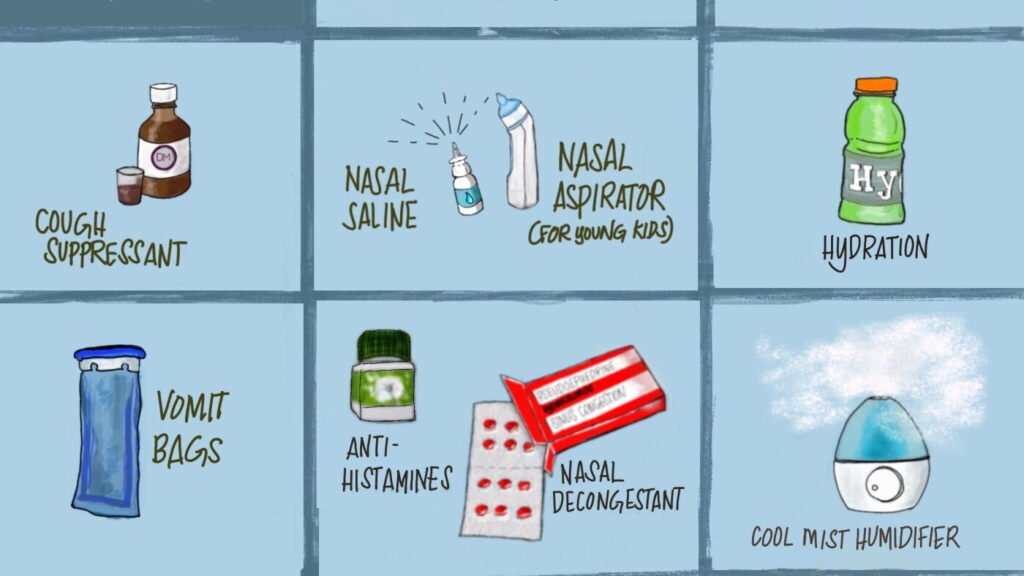
Pain relievers. Non-steroidal anti-inflammatory drugs (NSAIDs) like ibuprofen or naproxen can help relieve pain and discomfort from headaches, body aches and sore throats by reducing inflammation, says Reed.
- For kids: Don’t use children’s ibuprofen for children under 6 months old; naproxen is only approved for children 12 years and older.

Fever reducer. Medications like acetaminophen and ibuprofen can safely reduce body temperature, though acetaminophen is usually the better choice for fevers.
Antihistamine. Yes, the same thing you take for spring allergies! Colds and allergies have similar symptoms like sneezing, runny noses and watery eyes, which is why they can both be treated by a histamine-blocking medication that can help dry up your sinuses.
- For kids: Some OTC allergy medicines are approved for children as young as 6 months, but not all — and some have more side effects than others, says Amin. Check in with your care provider first if you have questions.
Decongestant. Pseudoephedrine pills or nasal spray can relieve a stuffy nose or sinus pressure by restricting blood vessels and opening airways in your nasal passages.
- For kids: Pills are not recommended for kids under 4 and medicated sprays are not recommended for kids under 6.
Cough suppressant for a dry cough. Dextromethorphan — often referred to as “DM” on the cough syrup box — can temporarily suppress the signal in the brain that triggers your cough reflex, says Reed.
- For kids: Not recommended for children under 4; do not use for children under 2, according to the American Academy of Pediatrics.
Cough expectorant for a congested cough. Guaifenesin may help relieve chest congestion by thinning mucus in your airways, says Reed. But before you buy, try just staying hydrated first. “Water is a natural expectorant,” she says.
- For kids: Cough medicine is not recommended for children under 4; do not use for children under 2, according to the American Academy of Pediatrics.
Read the label on the box or bottle of OTC products carefully to make sure that what you’re taking isn’t expired and will treat the ailment it’s intended for. And always stick to the recommended dosage and usage to avoid unnecessary risks or side effects, says Reed.
Honey
Honey is a great sick day remedy for all ages, but is especially helpful for small children not yet old enough for cough medicine, says Amin. “Honey is an anti-inflammatory that also helps with coating the throat, which can help with that cough trigger that children will have.”
Note: honey isn’t safe for children under 12 months due to the risk of botulism.
Thermometer
This is a basic, must-have tool to check your temperature on those days you suspect you or your little one are running a fever, says Amin.
Rectal thermometers are preferred for children 3 and under; oral and digital infrared thermometers are both fine choices for anyone older than that. (But oral thermometers are usually more accurate.)
Nasal saline treatment
The dryness of winter can dehydrate your nasal passages and make it easier for viruses to attach and replicate in your nose and throat.
One easy solution is to irrigate your nose with a saline spray or rinse, says Amin. This can be both preventative by helping to keep the mucous membranes in your nose moist, as well as symptom-relieving by loosening thick mucus if you have a cold.
Research even suggests that using saline drops at the first sign of a cold can reduce symptoms in small children by up to two days.
Other comfort items
Chest rub. Vapor rubs containing combinations of camphor, eucalyptus and menthol oils may provide some relief for nighttime cough and cold symptoms when applied to the chest and neck.
Use with caution, says Amin. Though a lot of families use this homeopathic remedy, there’s not a lot of research supporting its effectiveness, and it can be harmful if used improperly. Vicks VapoRub, for example, should be applied only to the chest and throat and never heated up. And be sure to check age restrictions before using any products on children — baby and child chest rubs will be formulated with gentler ingredients.
Disposable vomit bags. These are useful to have, easy to store and a great replacement for sitting by the toilet if the stomach flu should hit your house this year, says Amin.
Humidifier. A humidifier adds moisture to the air, which can help loosen mucus stuck in your sinuses. Reed suggests using a cool-mist humidifier when sick, which can help ease stuffiness during a cold.
Pedialyte, apple juice, water, Gatorade. Diarrhea or vomiting, common symptoms of the flu or COVID-19, can sometimes lead to dehydration. Make sure to have a few favorite drinks handy that can help replace those lost liquids for you or your little one, Amin says.

When to call your doctor
As long as your symptoms are improving — and responding to treatment — many viruses can be dealt with from the comfort of your home.
However, if you’re seeing these concerning symptoms, reach out to your doctor.
- A fever in infants younger than 3 months; above 102 F for children; 103 F for adults; or any high fevers that last longer than 1-2 days and/or don’t respond to fever-reducing medicine.
- Shortness of breath or erratic breathing
- Extreme thirst, inability to drink liquids, trouble urinating or producing tears, dark urine, severe or persistent vomiting
- Confusion, disorientation, extreme irritability or weakness
These aren’t the only signs to look for, so when in doubt, reach out, says Reed. “Don’t be afraid to call your doctor or talk to a pharmacist about what’s going on. It doesn’t hurt to double check,” she says.
This digital story was edited by Malaka Gharib. The visual editor is CJ Riculan.
We’d love to hear from you. Email us at LifeKit@npr.org. Listen to Life Kit on Apple Podcasts and Spotify, and sign up for our newsletter.
About The Author